Does your printing process change with the seasons?

I have noticed that I do more printing with grasses in the fall, use Daniel Smith inks in the summer, need to clean my studio in the spring and use photo imagery in winter.
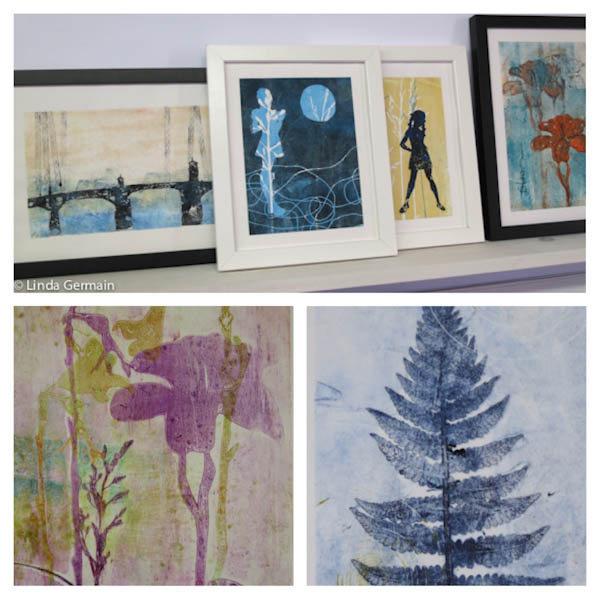
seasonal inspiration for printmaking with linda germain
Seasonal challenges of printmaking without a press

Summer:

  • Heat can dry up printing inks and the gelatin plate
  • Time – Do I go to the beach or play with the kids or print?
  • Fresh air means a great time to work outside and use those “toxic” inks

Fall:

  • Back to School – time to take a class and learn from others
  • Grasses are delicate but strong at this time of year – good for “stencils”
  • Orange, black and brown show up in my prints

Winter:

  • Cold temperatures can harden the gelatin plate and stiffen ink
  • Snow storms and short days mean it is a great time to connect with others in an online class
  • Minimal landscape inspires me to work with black and blue ink only

Spring:

  • Hope of all things fresh and new
  • Too early for tender grasses
  • But just the right time to purge the studio

Once I realized there was a flow to my printmaking, I could accept the limitations and embrace the opportunities that each season presents.  What about you? Share your seasonal wisdom in the comments below.

Does your printing process change with the seasons? Read More »
Less is More when making prints

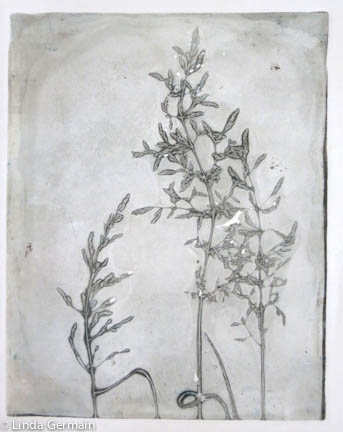
Gelatin and glycerin plate print by linda germain
Gelatin plate monotype with found stencils

I  am entertaining the idea that less is more.

Less is more…

Where could I apply this idea?

  • Colors in a print
  • Textures in  a print
  • Objects in the composition
  • Stuff in my studio
  • Things on my to do list
  • Time to complete a project

What do you think could less be more for you in some areas of your artwork or life?

Make minimal monotypes

Share your thoughts below.

Would you like to explore gelatin printing with the homemade gelatin and glycerin plate in Make Monotypes, the online printmaking class. Check the workshop schedule and sign up.

This is what one student expressed about Make Monotypes, printmaking class:

“Now, I have the confidence to try different printing techniques and to even cut up the gelatin plate to get interesting shapes.” says Lynne P.

Make a Glycerin & Gelatin Printing Plate Now!
Get the FREE recipe to make a gel printing plate

Additionally, you will receive a weekly email about printmaking, ideas, tips and courses.

Join us today and start having fun!

Less is More when making prints Read More »

Video of student prints – Make Monotypes – printmaking course

Monotype Prints by students in Make Monotypes with Linda Germain from Linda Germain on Vimeo.

Be inspired to join this final session of the online printmaking course, Make Monotypes.  Class starts September 8th.  Sign up today and soon you will be making beautiful prints of your own.

Making prints on the homemade gelatin plate is quick, non-toxic and unpredictable. I this printmaking class I hope you:

  • Gain confidence and get a creative boost
  • Practice the skills and make them your own
  • Create beautiful prints to frame and share


Video of student prints – Make Monotypes – printmaking course Read More »

What kind of inks do you like for gelatin printing?

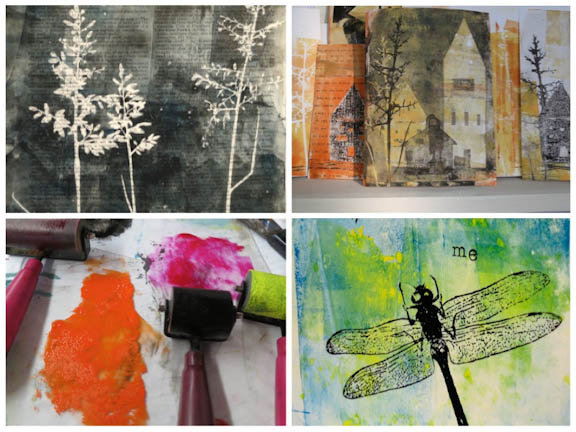
different paints and inks for gel printmaking by linda germain
What inks or paints do you use for gelatin printing?

I have played with several different inks and paints for gelatin printmaking.  Each one has it’s own strengths and weaknesses. I use speedball water soluble block printing ink. I like that ink for the class because it allows for the transfer of ink from brayer to plate to stencil to paper and back and forth again.

In the gelatin prints above I used:

  • top row = speedball water soluble block printing inks
  • bottom left = acrylic paint and alcohol scrape
  • bottom right = Daniel Smith water soluble block printing inks

If you would like to gain more control over your gelatin printing techniques, then join us today, in an online printmaking class.

SaveSave

What kind of inks do you like for gelatin printing? Read More »

How to choose clip art images for Thermofax screen printing

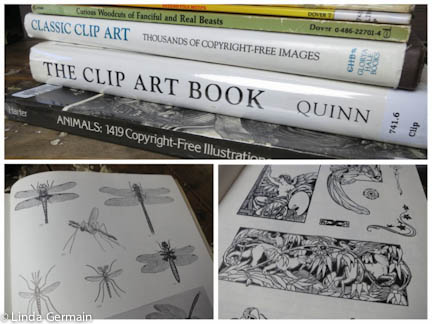
High contrast black and white clip art can be strong imagery for making thermofax screens
Copyright Free Clip Art is good for thermofax screen printing

A thermofax machine quickly “burns” screens for small scale screen printing. Choosing the right images will help create screens that will last for 100’s of prints.

You need a carbon based photocopy of a high contrast image for best results in creating the thermofax screen.

Here are some guidelines for choosing clip art images to use to create screens for printing

  • High contrast black and white image
  • Not a lot of big solid black area
  • Strong clean photocopy from a toner based copier
  • Copyright free or in the public domain
  • No bigger that 8″ x 10″

I think it is a good idea to start with small images, like 5″ x 7″ or smaller.  It is easier to print this size with out the aid of a rigid frame.

Photos, drawings and stamped marks can be good sources of imagery for Thermofax printmaking. I hope to talk about these type of images in the next few weeks.

If you are interested in an online printmaking course in Thermofax screen printing, then join the special interest group.  I am excited about creating this class for you. It is a low tech printmaking technique that is possible to do with out a press and still obtain detailed impression.

How to choose clip art images for Thermofax screen printing Read More »