combined techniques

Simple tools – bold marks

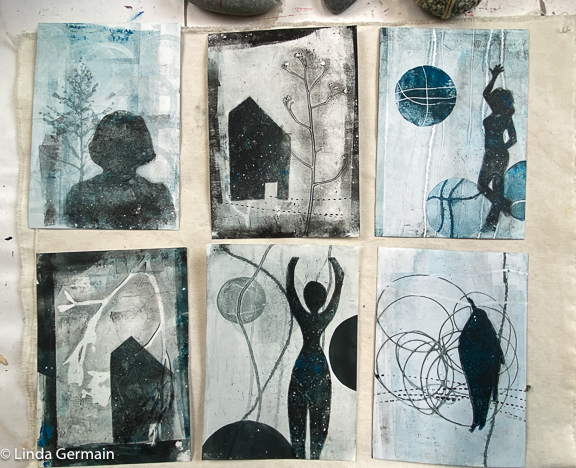
I love to keep the printmaking process simple and non-toxic. That is one reason that I enjoy gelatin printmaking so much.

simplified gelatin plate monotype prints

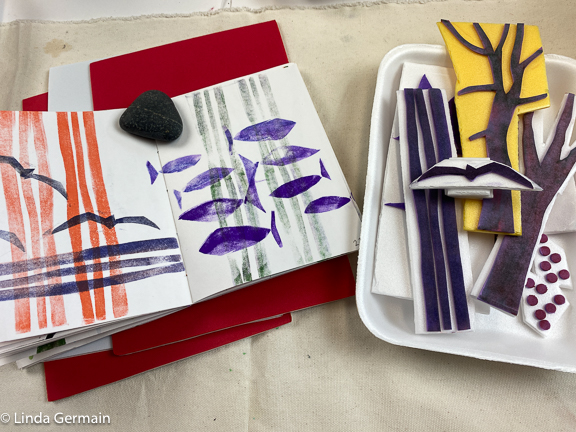
I also enjoy the easy printmaking process of relief printing. Sticky back foam and scissors make this even easier.

foam relief stamps

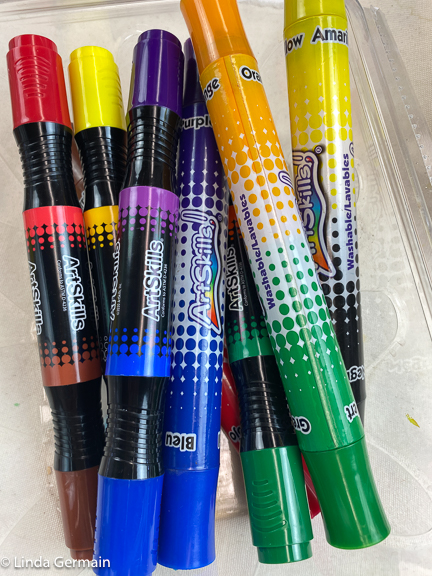
The simpler the design the more I like it. Stamp pads can be expensive and the ones I buy dry up too fast. I found a way to ink the foam plates with broad nib markers.

broad tip poster markers to ink foam relief plate

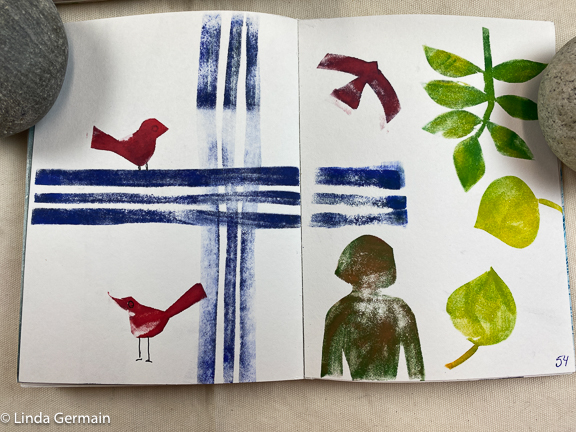
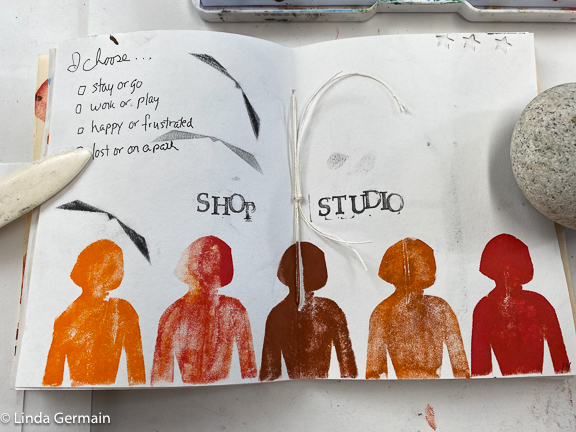
I can quickly print these stamps in books and on papers. I love that I can use limited supplies and have very little clean up. And because I am using water based markers to “ink” the foam stamps everything is dry very quickly.

foam stamps printed on book page

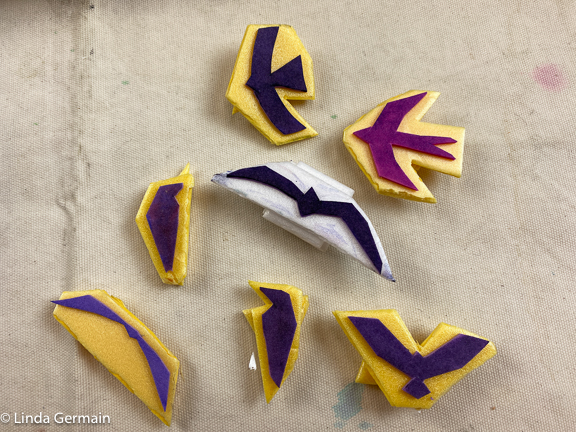
I have made quite a stack of little foam stamps over the last few weeks. Some inspired by nature walks.

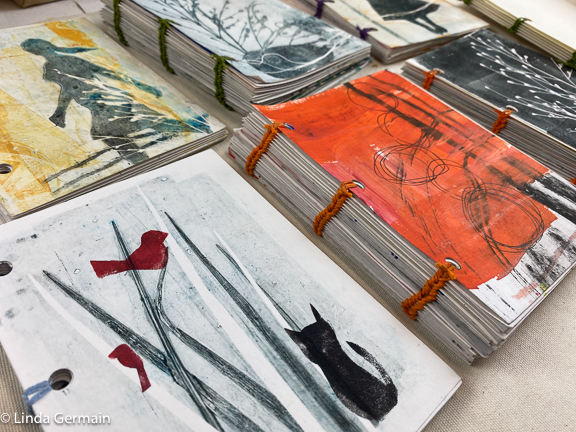
tiny foam bird stamps by linda germain

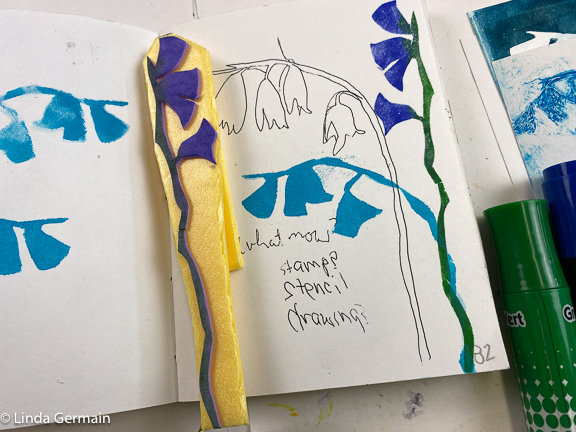
I think small is good for this process, because they are easy to ink and print. I have made a few that are about 6″ long and I think that is big enough.

blue bell foam stamp

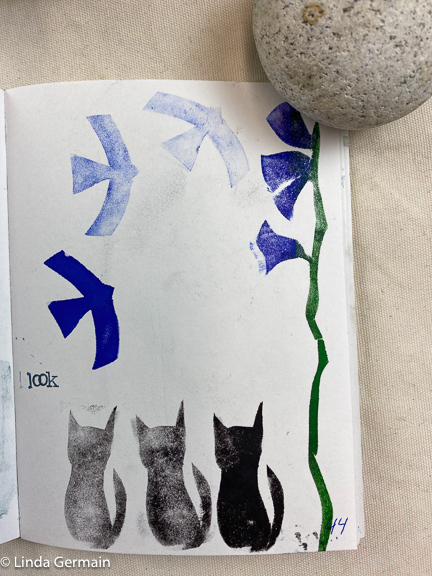
hand stamped cat print

Check out the self study printmaking classes that are available now.


Simple tools – bold marks Read More »

In and Out of the Studio

I think time outside of the studio, feeds what is created in the studio. What is your experience?

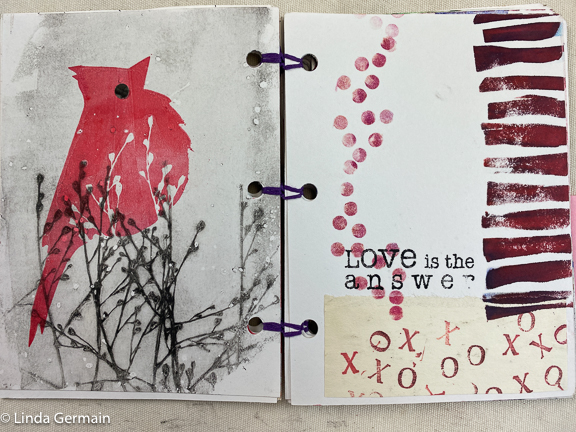
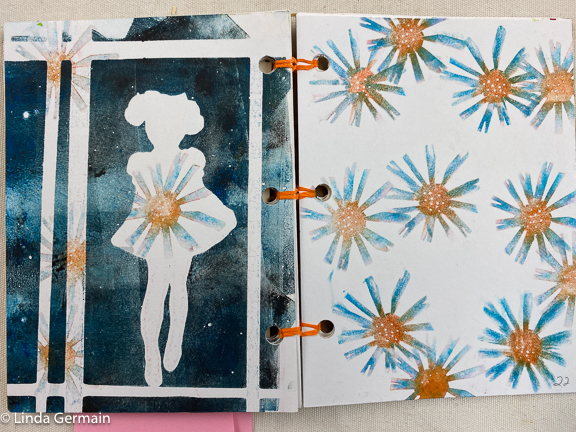
artist book relief prints

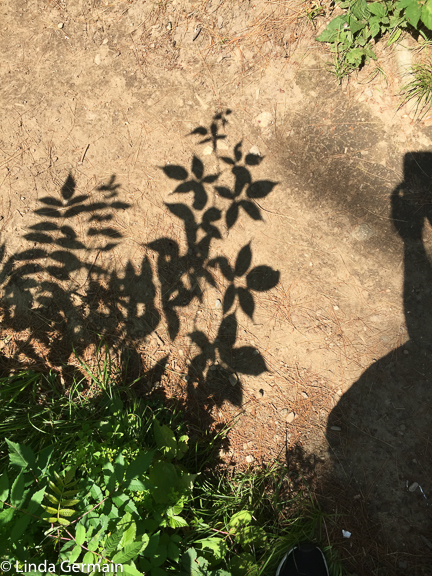
I often see shadows and leaves on my morning walks that I use as reference in my gelatin printmaking. I collect weeds and grasses to use as masking stencils too.

cast shadows great for drawing

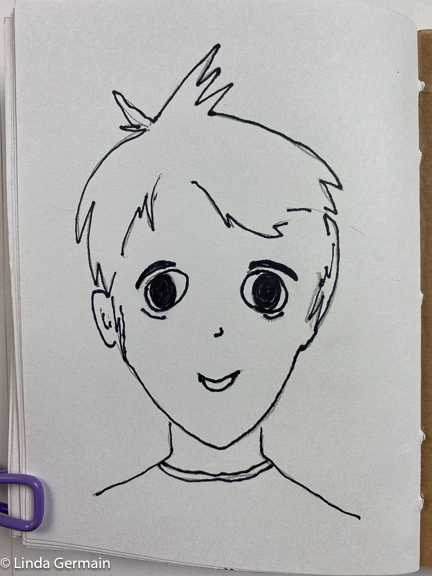
Lately, I have been doing lots of line drawings of faces. Old photos have been the stimulus for some of these drawings. I have also been capturing new images of family members to use as reference.

stylized portrait

Even an extended vacation could inspire a new series or process.

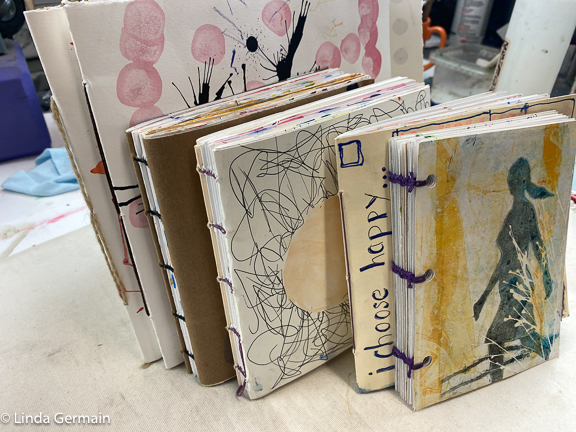
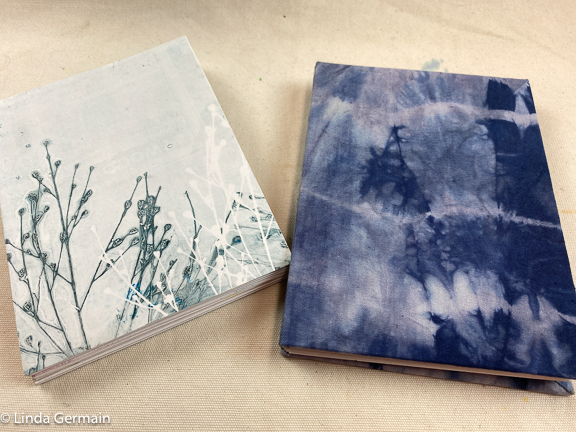
gelatin prints bound into artist books

I just came back from Maine Media for a week long class, A Sense of Place with Isobel Lewis. I enjoyed exploring new book forms and printmaking methods.

If you are looking for a stay at home art vacation option, then check out the self study classes on my workshop page.

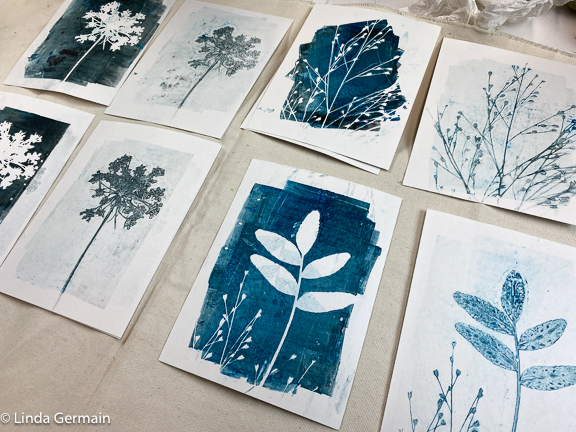
botanical gelatin plate monotype prints

In and Out of the Studio Read More »

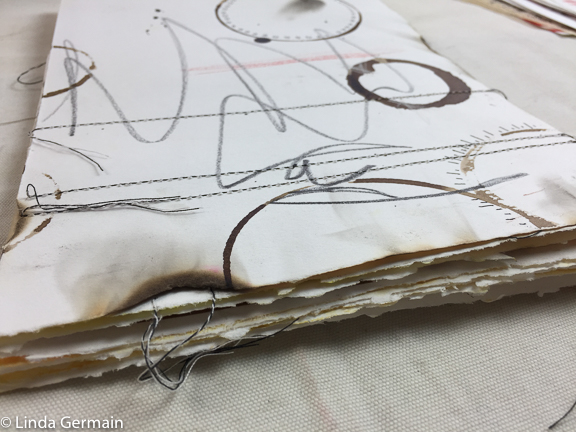
Tear, sew, burn and bind

Do you have a pile of paper or prints that you are willing to transform with:

  • tearing into collage shapes
  • sew with or without thread
  • burn or smoke stain and
  • bind or fold into books?

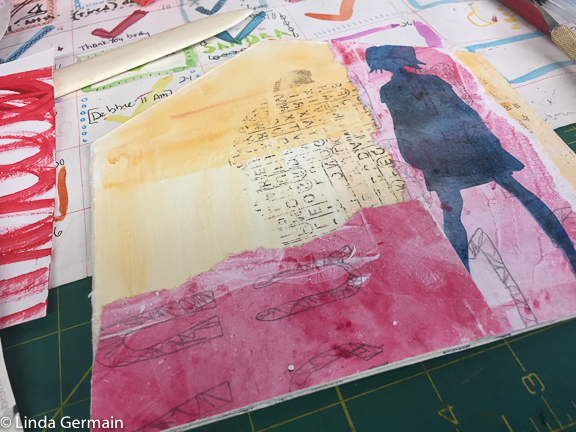
collage on children's board book

If so, then you might enjoy the Mixed Media Retreat, and online class starting soon.

Tear, burn and stitch mixed media art

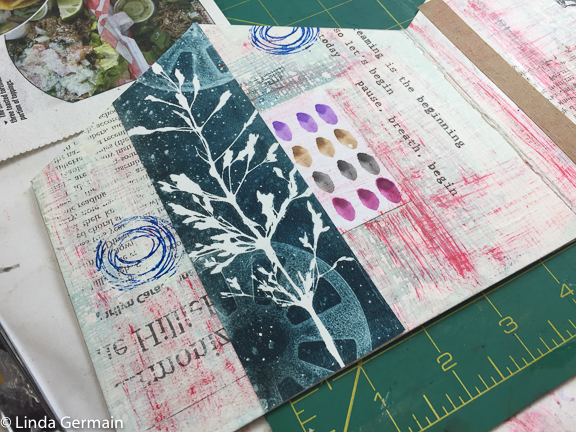
The class is designed to introduce ideas and techniques into your practice that will transform your papers and prints into books and mixed media prints.

collage with gelatin prints

Each lesson includes:

  1. A simple mark making prompt
  2. A textural layering technique
  3. A book form for reshaping prints and papers
  4. An artist talk to stimulate the mind.

You can get more details and register on the workshop page.

Tear, sew, burn and bind Read More »

Abundance and texture – Books as ART Materials

I wanted to share with you why I love using books as ART Materials.

Old books are:

  • tactile
  • intimate
  • abundant and
  • often nearly free

Books for making art collages

The pages can be the foundation for printing, painting collage and origami.

collage of book pages

But the parts that I love the most are:

  • the stuff that makes up the spine
  • the book cloth and
  • the book board

book as textural elements for collage

One old book can be the stimulus for many projects. If you thinks this sounds interesting, then gather some old, unwanted books and join us in the online class, Books as ART Materials.  Get all the details and register on the workshop page.

Abundance and texture – Books as ART Materials Read More »

Deconstructing a book – discovery process

I am getting ready for the Book as ART Materials class, and realizing how much I enjoy the deconstruction and discovery process of take an old book apart.

deconstruct books to use as art materials

And I suggest that for this process it is okay to judge a book by its cover.

collect old books to alter

When using books as art materials, I think the older books have more surprises to offer. And they are a lot easier to take apart.

The magical parts are in the spine and the covers. The spine often has glue, mesh and other supportive materials that are great for collage.

book parts collage

Pages can be used for so many applications. Basically you can use them for any project that calls for paper:

  • origami
  • printmaking
  • painting
  • collage and more

I encourage you to find an old but not precious book and dissect it! Then see what you can make with the parts. And join us in the online class, Books as ART Materials. Read the details on the workshop page.

art projects using book parts


Deconstructing a book – discovery process Read More »