Thermofax Screen Printing on Tea Bags
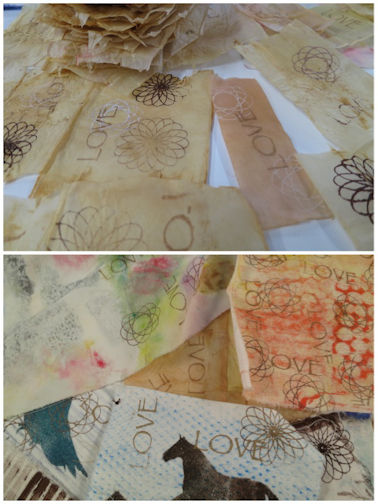
Thermofax screen printing on tea bags and fabric with Linda GermainThe weather has been chilly here in New England, and I have a big pile of tea bags.

I love the fragile decay.

I have used tea bags for printmaking, collage and some sewing projects. But the pile is so big, I needed a process that would consume a bunch of bags.

Thermofax screen printing is the answer.

This is what I did:

  • Suspend judgment & play
  • Gather lots of tea bags and fabric for printing
  • Set up my workspace
  • Padded surface covered with plastic
  • Credit card for my squeegee
  • Damp rag for messy fingers
  • Big table for laying out my prints
  • and then pull prints
  • I used brown, gold and a bit of white

Thermofax screen printing is a great way to add line elements, text and delicate details.

What types of images would you like to make into a thermofax screen for your artwork? Tell me in the comments section above.

Happy printing!


Thermofax Screen Printing on Tea Bags Read More »
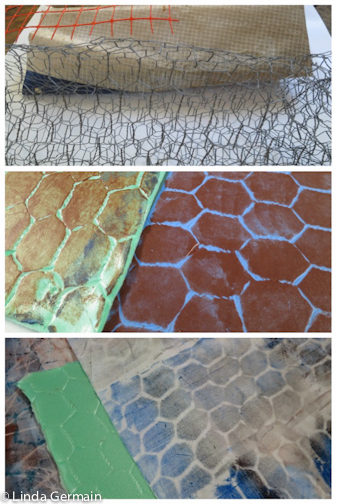
Wire pressed into foam for relief printing tools

Press chicken wire into foam to make a relief  stamp for Printing by Linda Germain
Press wire into foam to make a relief stamp for Printmaking

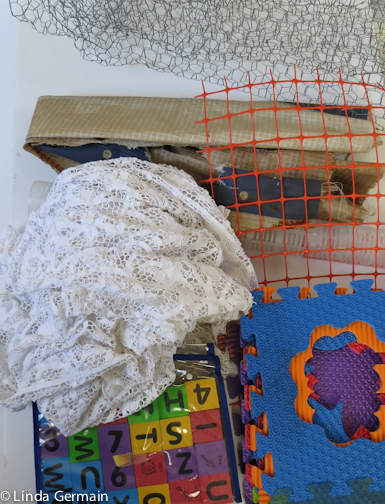
I cut a piece of chicken wire to see what kind of marks or printmaking tools I could make.

  1. First I tried to attach it to a board to get it to lay flat – not happy.
  2. I tried laying fabric on top and doing a brayer rubbing – not so good
  3. I press the wire into foam – hmm? like it.
  4. Used the the foam relief tool to do a brayer rubbing. Success.

Wire is sharp and can be hard on the rest of my supplies. I was most pleased with the relief stamp.

Yeah! So now I can get rid of the roll of chicken wire that I have been holding on to and hoping to do something with.

Did you accept yesterday’s challenge? Did you make art with something that had been collecting dust in your studio?

You still have time. Grab one of those interesting “things” that speak to you and play!

Wire pressed into foam for relief printing tools Read More »

Challenge – Use what you have

Found tools for Mixed media printing by linda germain
Found Object tools for Mixed media printmaking

Are you inspired by found objects?

Do you see possibility in everyday stuff? Do you have a collection of inspiration in the corner of your studio that you have gathered for years?

I do.

Found objects are the foundation of my printmaking process.

I challenge you to use one of those found objects in your art making within the next 24 hours. The sooner the better. Suspend all judgement and expectations and just play with your new toy.

You may start with one idea that will flow into something completely different.

I am accepting the challenge. I am going to do some kind mixed media printmaking with the chicken wire that has been bouncing around my studio for a few years.

Accept the challenge and share your experience with others. Put a link to your new toy or creation in the comments section.

Challenge – Use what you have Read More »

12 Tips for caring for Printmaking Tools

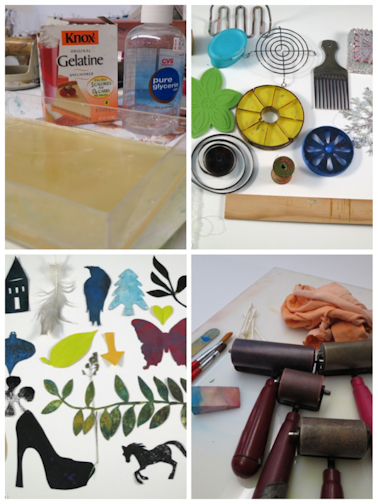
print tools for gelatin plate printing
print tools for gelatin plate printmaking

How do you relate to your printmaking tools?

Do you:

  • Have a place for everything?
  • Or are they piled all over the studio?
  • Are they cleaned after every use?
  • Or do they have years of visible wear
  • Do you rush out to buy the latest and greatest gadget
  • Or do you dig through the recycle bin?

There is really no right or wrong way to take care of your printmaking tools, as long as it works for you. I will share my tips for caring for your gelatin plate printmaking tools.

Printing Tool Care Tips

The Brayers

  1. Clean your brayers after every session, so they keep spinning
  2. Use tepid water and very mild soap
  3. I have heard that Murphy’s Oil Soap will remove Acrylic paint.
  4. Be sure to clean around the edges and under the cross bar
  5. Rest Brayers on the cross bar rather than the roller

The Gelatin and Glycerin Plate

  1. Lightly cover with plastic chopping mat
  2. Be aware of your climate, if very hot then you may need to store in the refrigerator to make the plate last
  3. Plate seems to last longer if you use it regularly
  4. If you notice early signs of molding, then wipe with vinegar and water mix, melt and reform it. Pour through a tarlatan to catch the gunk

Stencils

  1. Let them dry flat and not stuck to other stencils
  2. Store in file folders or shallow trays
  3. I don’t clean them, because I love the ink build up
  4. Every once in a while purge and sort. It makes them easier to find

Stamping Tools

  1. Clean delicate tools so they don’t get clogged with ink
  2. Store in handy boxes or containers
  3. Put like tools with like tools

I would rather be playing with making prints than taking care of my tools. But if I don’t take care of them, then they won’t do what I want.

Gelatin printmaking tools are very easy to clean, store and care for. That is one of the reason that I love the process. I can be more spontaneous.

Join us in a class – see what is being offered on the printmaking workshop page.

12 Tips for caring for Printmaking Tools Read More »

Trace monoprint on Fabric

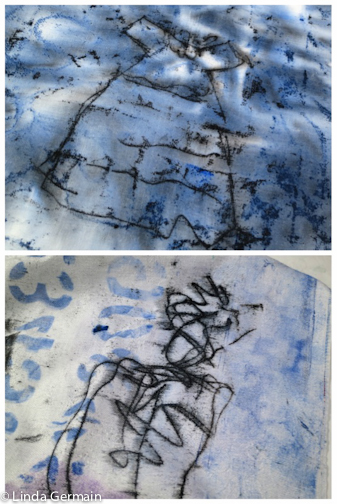
Trace monoprint on fabric with screen printing inks by Linda Germain
Trace monoprints on fabric

A fuzzy black line is the characteristic mark of a trace monoprint.

I love loose spontaneous drawings – scribbles with life. Today I played with my pile of gelatin prints on fabric by adding a trace monoprint on the top.

This is how I approached the printing process:

  • lightly and evenly spritz my fabric
  • roll out a thin layer of screen printing ink on a plexi glass plate
  • lightly place the fabric on the ink
  • scribble, sketch and draw quickly on the back side of the fabric
  • I used a pencil, the end of a brayer and a light quick touch

It is a trial and error process to figure out how much to spritz the fabric. Too wet means the lines will run and too dry then the ink may not transfer to the fabric.

Do a google image search for Paul Klee Monoprints for more inspiration. Then try it with your signature style. You can use this printmaking method on paper or fabric.

Enjoy!

See more trace monoprints in the gallery.

Trace monoprint on Fabric Read More »