Possibilities for printing palettes

We use a palette to roll up ink and get a nice thin layer on the brayer. There are options to choosing a palette.

I like to keep things simple and use what I have, so I am going to give you some ideas for what to use for a palette for rolling up ink.
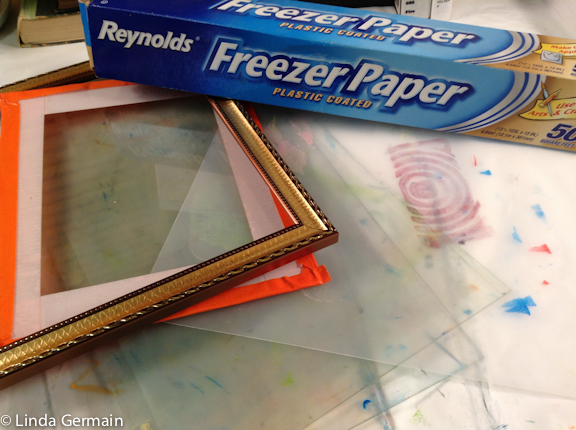
Palettes for rolling up ink for printmaking

Palette Options:

  • Piece of plexi glass or acrylic about 11″ x 14″ or bigger. You may be able to find “remnants” of this from a glass or window repair shop.
  • Plexi glass from a Poster frame is another option. These are usually thinner and may need to be taped to the table.
  • Glass from a picture frame, with the edges taped is another idea – just be careful. Don’t cut yourself.
  • Plastic chopping mats can work – You may need to tape it to the workbench.
  • Freezer paper taped to the table works too. It helps if the table is smooth and the freezer paper is securely taped down.

I use plexi glass plates. They are easy to clean and I don’t have to tape them in place. And I get them free from my dad. So if you are new to printmaking or you are looking for options for palettes try out some of the ideas above and see what works best for you.

Ready to Ink your brayer

Join us in the next online printmaking workshop – read the details on the print workshop page.

Possibilities for printing palettes Read More »
Many ways to learn to Draw

As I fine tune the drawing lessons for the new weekend workshop, I am seeing that there are as many ways to learn to draw as there are teachers and students.

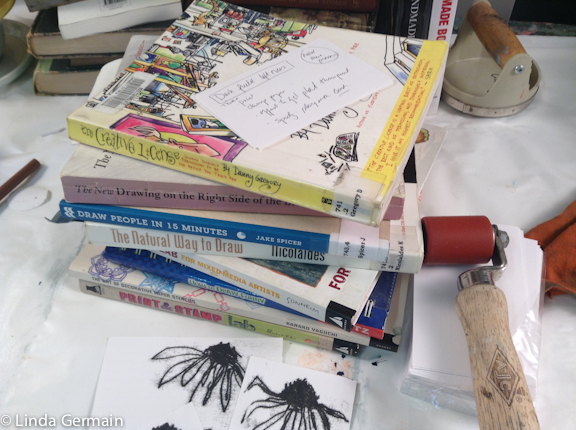
drawing books to inspire printmaking

Some say learn to draw in 15 minutes and another 355 hours.

So what is the truth?

It depends:

  • What are your goals?
  • What style do you want to learn?
  • What is your reason to want to draw?
  • What experience or baggage do you bring to the class?


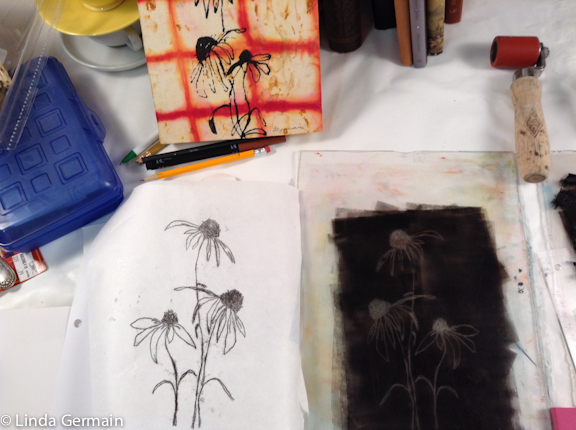
contour drawings and trace monoprint workshop

It helps to:

  • Focus on expanding your idea of drawing
  • Explore gesture and contour drawing
  • Building a drawing habit that will feed your printmaking for life

So I would say it probably takes more than 15 minutes to draw and hopefully less than 355 hours to start to make drawings that you like. The thing to do is to find the tools that support you and your unique expression through drawing and printing.

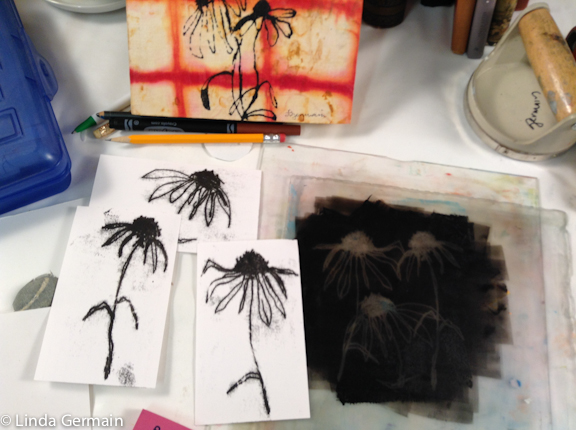
flower monoprint linda germain

The thing that takes so much time is:

  • Switching to the right/spatial side of the brain
  • Training yourself to LOOK at what you are drawing
  • Start to see what you like about your drawing and be less critical

If you would like to use your simplified drawings to make Trace Monotype Prints, then check out the details on the workshop page.

If you would like a simple tutorial to explore some contour line drawings, then sign up below.

GET the FREE drawing with Matisse Tutorial
Build your skills and confidence in your ability to draw

Join today and get notice of future classes.

You will also get weekly emails about printmaking, tips, tools and classes.

Many ways to learn to Draw Read More »

New tools for making artist books

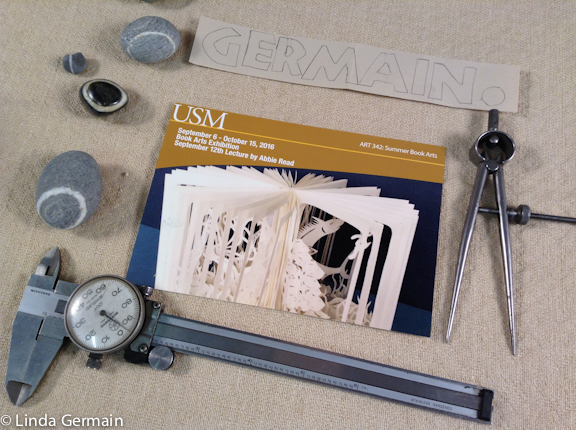
I was pleased to learn about using calipers and dividers to make measurements for folding and cutting when making artists books.

Use calipers for measuring for art books

Martha Kearsley, of the Strong Arm Bindery, showed us how to use these tools to measure book blocks and threads to calculate the width of the spine. The caliper is the tool on the bottom with the dial. The teeth on the left open like a mouth and measure a text block.

The pointy tool on the right is a spring loaded divider. Turn the screw on the right and the pointy legs open or close. This allows you to divide the paper into equal lengths with out doing the math or using a ruler. This is good for dividing up the sewing stations on a binding and figuring out the folds of an accordion book.

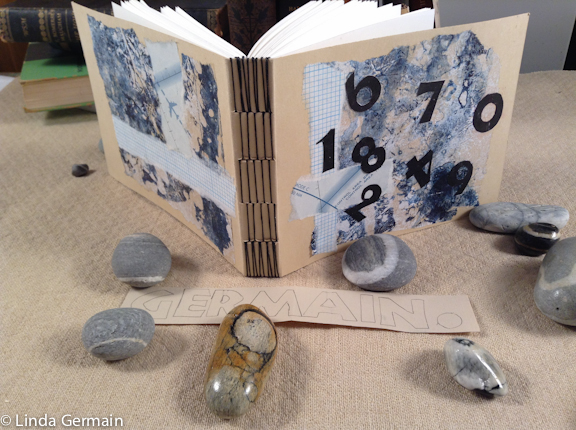
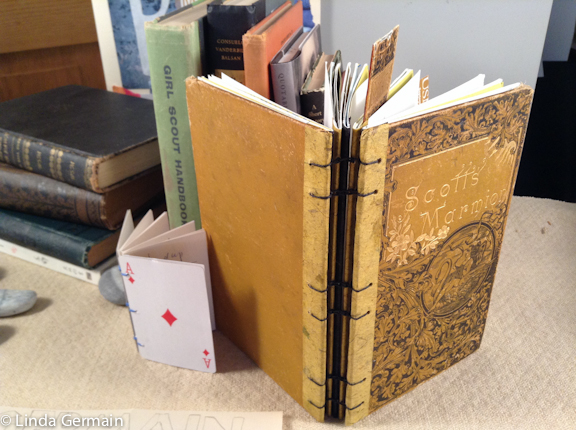
Artists book with long stitch binding Linda Germain

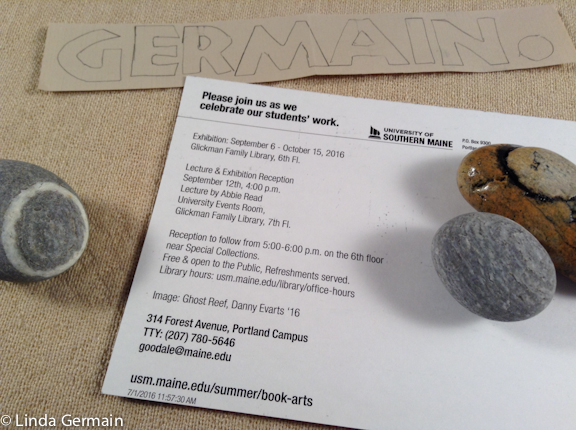
We had about 30 artists in the Summer Book Arts Program a USM and there will be an exhibit in September and October:

Book Arts Exhibition: September 6– October 15, 2016
Glickman Family Library, 6th floor USM, 314 Forest Avenue, Portland, ME 04104

Lecture and Reception: Monday, September 12th, 4:00 p.m.,
Lecture by Summer Book Arts Faculty Member: Abbie Read
University Events Room, 7th floor
Glickman Family Library, 314 Forest Avenue, Portland Campus

Following the lecture there will be an exhibition reception from 5:00-6:00 p.m.
6th floor near Special Collections
Refreshments will be served
Free and Open to the Public

New tools for making artist books Read More »

See draw print – new class

Check out the details about this new weekend printing and drawing workshop.

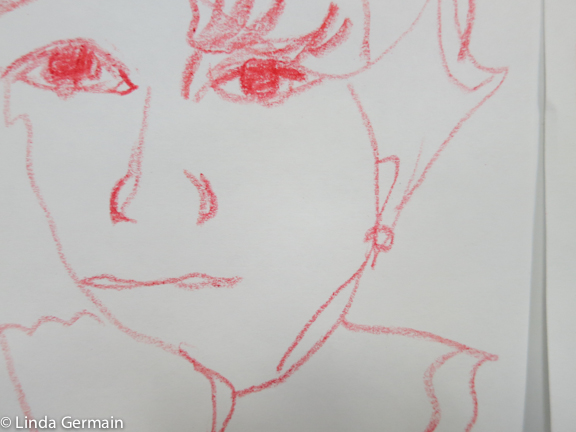
line self portrait drawing linda germain

This may be just the printmaking class that you have been waiting for. We will be exploring expressive line drawing, drawing habits and trace monoprints.

GET the FREE drawing with Matisse Tutorial
Build your skills and confidence in your ability to draw

Join today and get notice of future classes.

You will also get weekly emails about printmaking, tips, tools and classes.


See draw print – new class Read More »

Learning at Book Arts Workshop

Last week I had the opportunity to be a student for 7 days of printmaking and book arts at USM in portland, ME. I unpacked all my creations and experiments today and am pleasantly pleased.

Book Arts program at USM

We had 8 different instructors and covered things like intaglio, relief printing, coptic binding, long stitch, hand drawn fonts, paste papers, poetry writing, accordion folds and altered books. WOW! A lot to pack into 7 days.

Altered book with coptic binding

Above it the the book that I made with the guidance of Anna Lowe of the Purple Bean Bindery She made learning fun and easy.

Long stitched book

This long stitch bound book was made on the last day, under the skillful guidance of Martha Kearsley of the Strong Arm Bindery.

Learning to draw a font

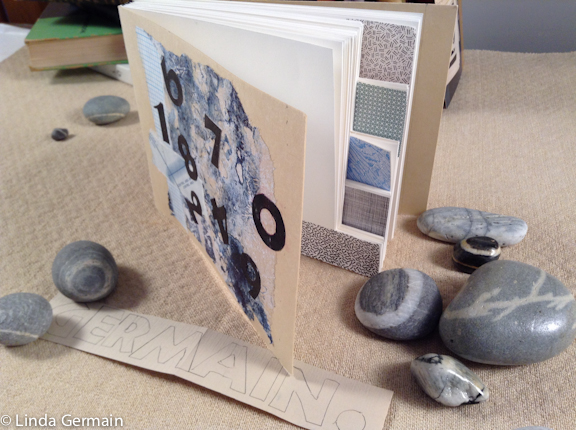
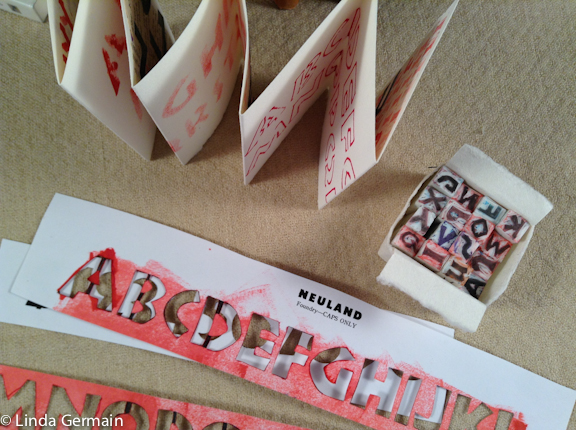
Walter Tisdale, book artist from Bangor, ME showed us how to learn, tweak and modify the Neuland type face. We practiced hand drawing, cut a set of letter stamps and cut a complete stencil of letters to build muscle memory.

Foam Relief prints - hand printed

I was pleased to learn another approach to the low tech form of relief printing, from Pilar Nadal of Pickwick Independent Press. I treated myself to  working big and embracing her ideas.

Three take aways as a book arts student:

  1. Bring plenty of supplies but don’t limit yourself to using them
  2. Embrace the approach that is being taught
  3. To really remember the new technique, teach it to someone else right away.

I will be sharing more about my process and discoveries in the next few days.

Learning at Book Arts Workshop Read More »